Ghost

GHOST AUTONOMY
Overview
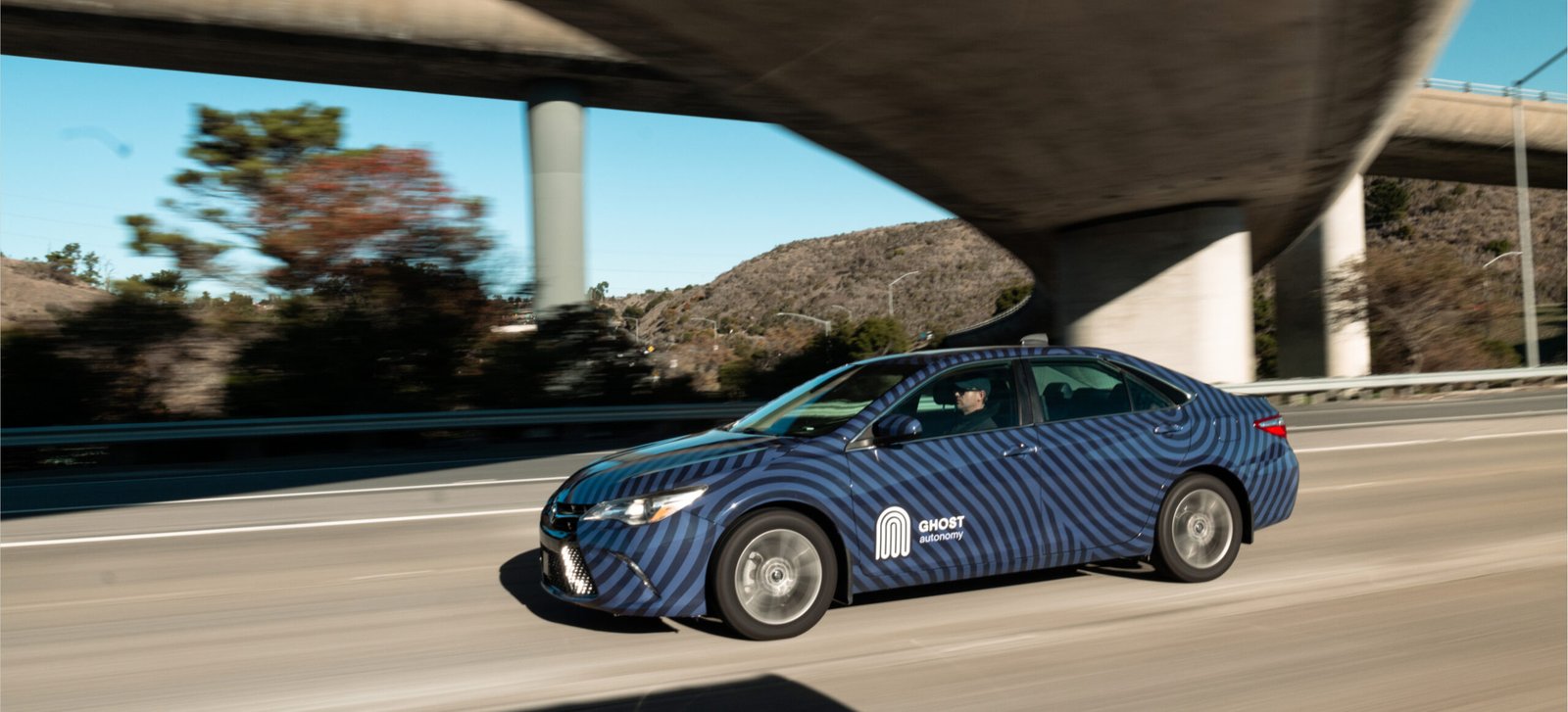
Ghost Autonomy is developing a camera-first autonomous driving platform designed to scale across mass-market vehicles. By prioritizing software intelligence over hardware-heavy sensor stacks, Ghost’s approach focuses on making autonomy more accessible, adaptable, and commercially viable.
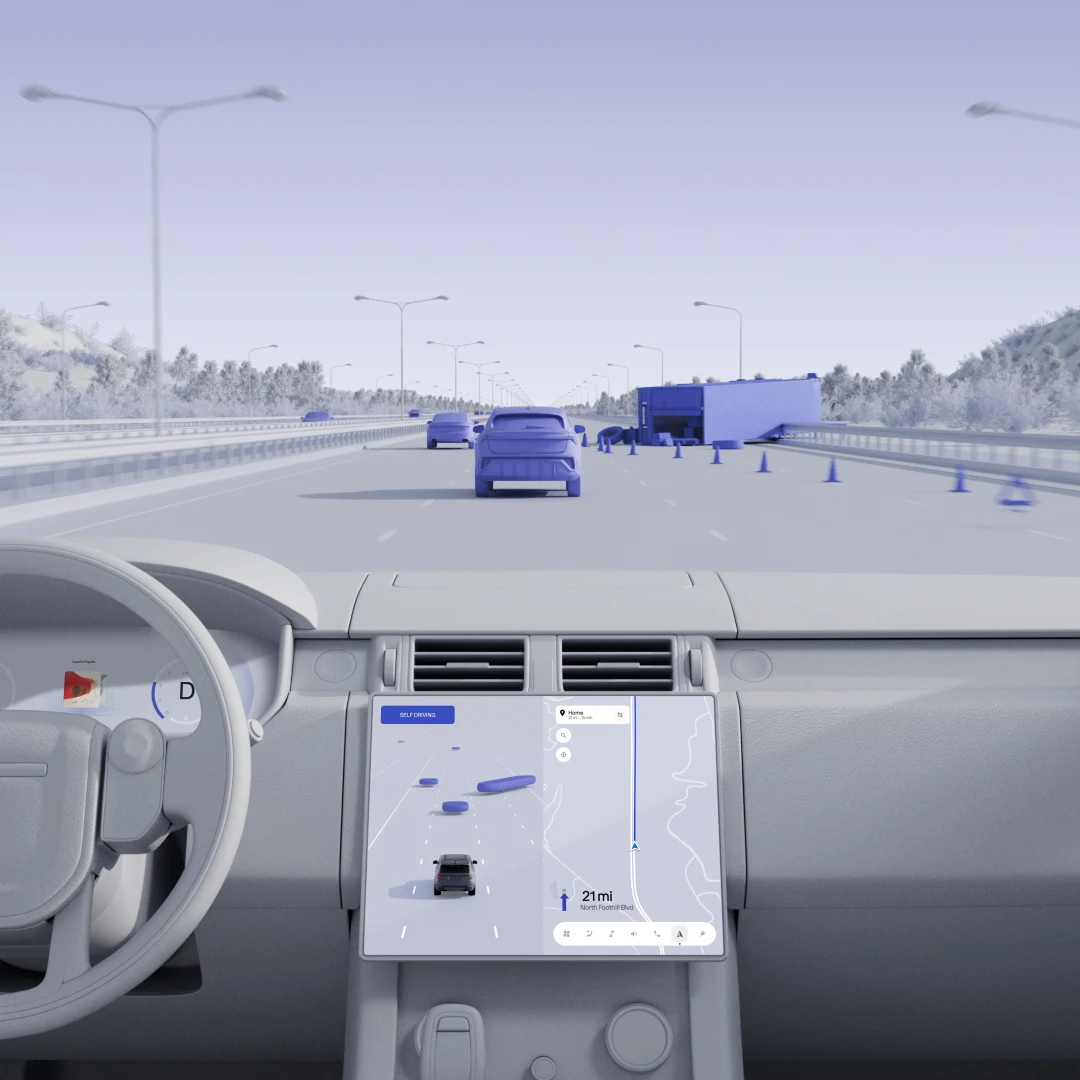
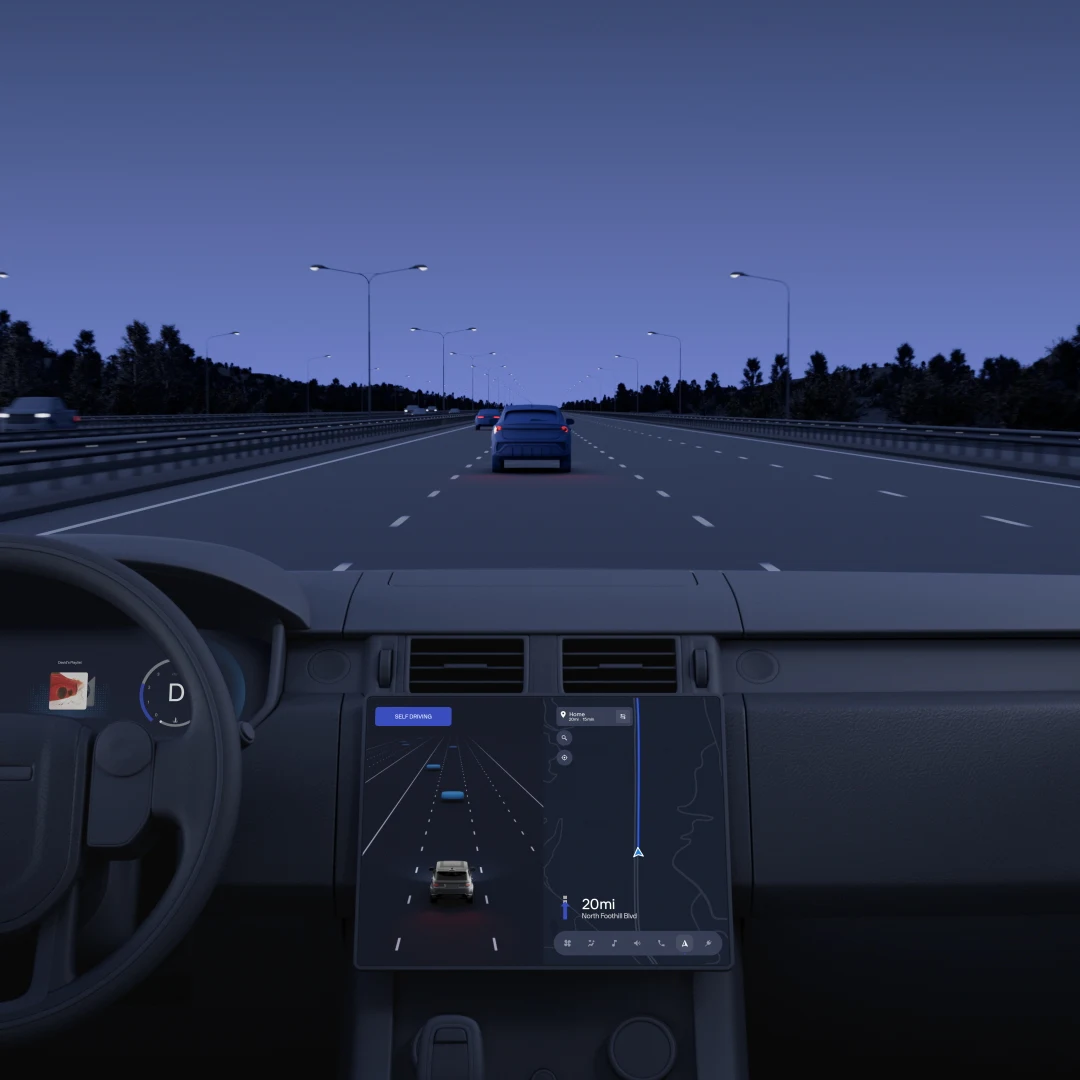
As vehicles transition from mechanically driven systems to software-defined experiences, the nature of control becomes less visible. Authority shifts between human and machine can occur seamlessly — but without clear communication, that seamlessness can create uncertainty. This project explored how interaction sound could function as a real-time layer of clarity, making driving states perceptually legible and emotionally stable.
The objective was to design a cohesive sonic architecture that communicates responsibility, reinforces trust, and supports safe transitions between manual, assisted, and autonomous modes.
Opportunity
As autonomy increases, so does ambiguity. Drivers must instantly understand who is responsible at any given moment, particularly during transitions between Manual Mode Activated, Assisted Driving, Autonomous Mode Activated, Takeover Request, Manual Takeover, and Manual Re-Engage.
The opportunity was to design a structured sonic framework that clearly differentiates these states while maintaining a cohesive tonal identity. The system needed to communicate authority level, urgency, and confidence without increasing cognitive load or contributing to alarm fatigue.
By aligning harmonic depth, duration, and rhythmic structure with responsibility level, sound becomes more than feedback—it becomes a stabilizing layer of governance, transforming invisible intelligence into an intuitive and emotionally grounded driving experience.

Sonic Vision
As vehicles become software-defined, the interface between human and machine shifts from mechanical feedback to perceptual communication. The sonic vision for Ghost Autonomy was to design a system that makes authority visible through sound. Rather than branding autonomy with futuristic spectacle, the goal was to create a calm, intelligent acoustic language that reinforces trust in moments of transition.
The foundation of the vision was shared control. Every tone needed to clarify who is responsible at any given moment — the driver or the system — without adding cognitive burden. Sound would not decorate the experience; it would govern it. Silence would be intentional in manual states, supportive and lightweight in assisted states, and more harmonically expansive when the system assumed greater responsibility.
The aesthetic direction leaned toward warm synthetic textures with organic harmonic overtones, avoiding sharp, robotic artifacts. Urgency would scale through rhythm and spectral brightness rather than harsh alarms. Escalation would feel structured and composed, even under risk.
Ultimately, the sonic vision positions sound as a stabilizing force in autonomous mobility. In a world where intelligence is invisible, sound becomes the language of authority, confidence, and shared responsibility.
Interaction Sound Language
The sonic vocabulary was refined to map directly to the six defined driving states, ensuring that every transition of authority has a distinct yet harmonically unified expression. Manual Mode Activated uses a grounded, low-frequency confirmation tone that is short and stable, signaling human authority and full system disengagement without flourish. Assisted Driving introduces a light upward tonal inflection, designed to feel supportive and agile, reinforcing shared control rather than replacement. Autonomous Mode Activated expands the harmonic field with a longer tonal bloom and layered mid-frequency warmth, communicating elevated system responsibility and quiet confidence.
Takeover Request shifts into a structured escalation language. The initial cue is focused and directional, designed to cut through the environment without panic. If unacknowledged, rhythmic repetition and increased spectral brightness introduce urgency while maintaining harmonic continuity with the broader system. Manual Takeover resolves downward with a decisive yet calm gesture, clearly confirming the transfer of authority back to the driver. Manual Re-Engage acts as a subtle stabilization cue, shorter and softer than takeover confirmation, reassuring the driver that full manual control is active and autonomy is no longer influencing the vehicle.
Across all states, duration, harmonic density, and temporal pacing scale with responsibility level. Lower autonomy corresponds to shorter, grounded gestures, while higher autonomy or increased risk expands harmonic presence and rhythmic structure. The system maintains one cohesive tonal identity; only urgency and authority shift.
Execution
Execution began with mapping real-world behavioral flows across all six driving states, identifying precise transition moments where authority shifts between human and system. Each transition was treated as a micro-interaction with defined emotional intent, timing requirements, and cognitive load constraints.
A tonal framework was developed first before individual sounds were composed. This ensured harmonic continuity across Manual Mode Activated, Assisted Driving, Autonomous Mode Activated, Takeover Request, Manual Takeover, and Manual Re-Engage. Core intervals, tempo ranges, and spectral boundaries were defined so that urgency could scale without breaking the system’s identity.
Prototyping focused heavily on transition timing. Engagement tones were designed to be under one second to avoid delaying driver response. Autonomous activation carried slightly longer tonal blooms to communicate elevated responsibility. Takeover Request was built as a layered escalation model, allowing urgency to increase rhythmically if the driver did not respond, rather than relying on abrupt alarm spikes.
Sounds were evaluated in simulated drive scenarios to test clarity under cabin noise, music playback, and conversation. Iterations refined frequency placement to avoid masking common automotive sound bands while maintaining perceptual salience.
The final system delivers a structured, modular sound architecture that scales with responsibility level. Each state is immediately legible, transitions feel intentional, and escalation remains composed — transforming invisible autonomy into an intuitive, emotionally stable experience.
Selected Works
ToyotaSound Design

SupernaturalSound Design
Ghost AutonomySound Design
Contact Here
Email : jerremylaesser@gmail.com
Phone : (415) 602 - 6904